
Seize the Limitation
The difference between what stands in our way and what we accidentally place there ourselves.

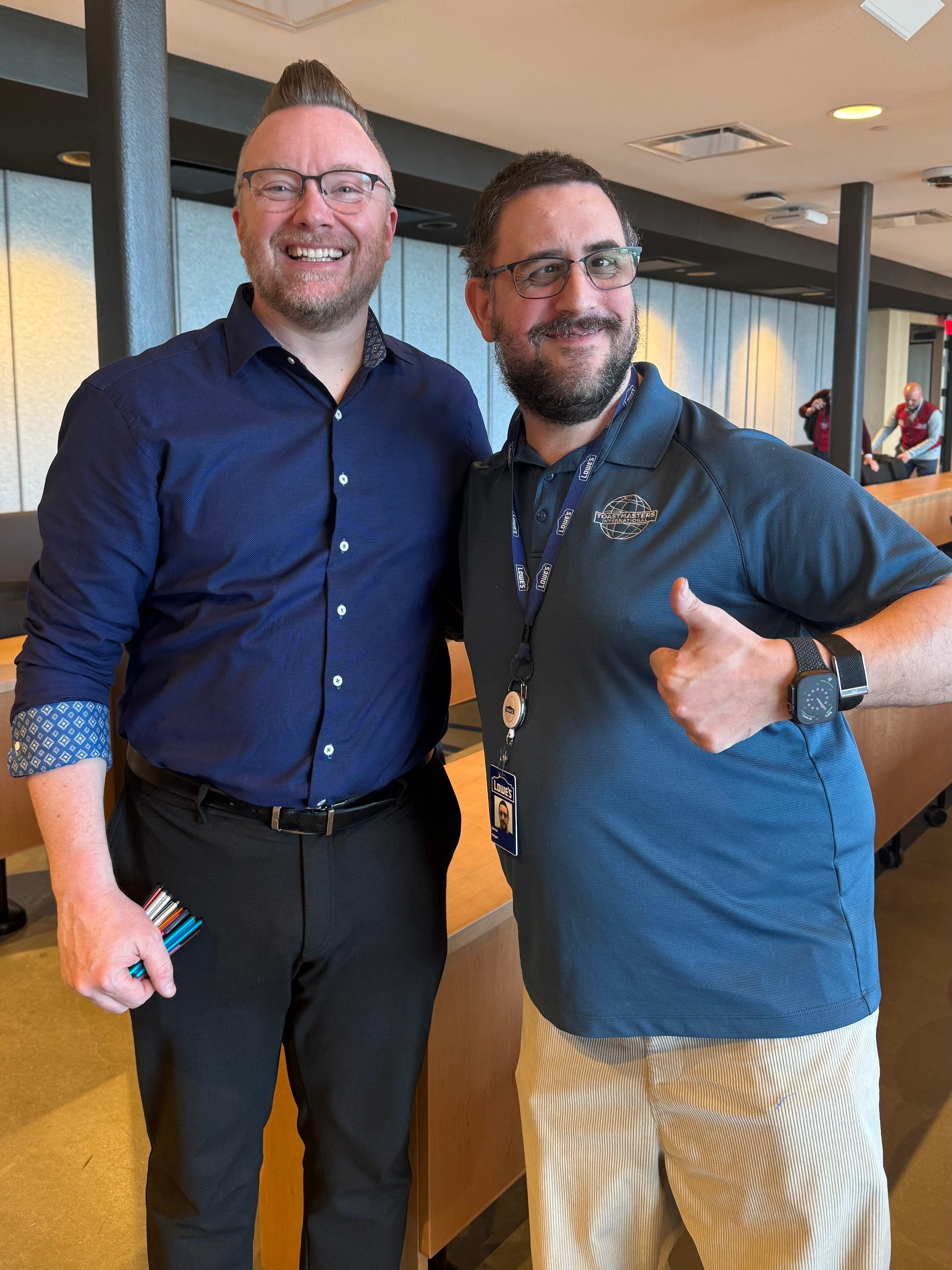
Today at Lowe’s Q1 Townhall, Phil Hansen said something I haven’t been able to shake.
Which is fitting, because the story behind his keynote is built around that exact idea: embrace the shake.
Hansen was an artist who loved pointillism, a style that depends on thousands of tiny, precise marks. Then he developed a tremor in his hand from nerve damage, and the thing that once made him feel most like himself suddenly felt out of reach. A neurologist eventually encouraged him to stop fighting the tremor and find a way to work with it instead. That shift became the foundation for his TED Talk, Embrace the Shake, and his broader message about transforming limitations into creative possibility.
That idea hit me hard.
Because I understand what it feels like to have a body that does not always cooperate with the picture in your head.
I live with Cerebral Palsy. I feel it every day. Some days it shows up physically. Some days it shows up mentally. Some days it shows up in the quiet question underneath everything: Is this going to make me seem less capable?
I would love to say I always see it as a strength. I don’t.
Sometimes I see it as a limitation before anyone else has the chance to. I walk into a room, a meeting, a project, or a new challenge already aware of what might be harder for me. And when you live that way long enough, the limitation can become more than physical. It can become a story.
But then I hear feedback from product partners, managers, mentors, and stakeholders that interrupts that story.
I hear that I ask thoughtful questions. That I make complex ideas easier to understand. That I bring empathy into the room. That I communicate clearly. That I advocate for users. That I keep moving forward even when something is uncomfortable or unfamiliar.
And every time, I’m reminded of something I’m still learning to believe:
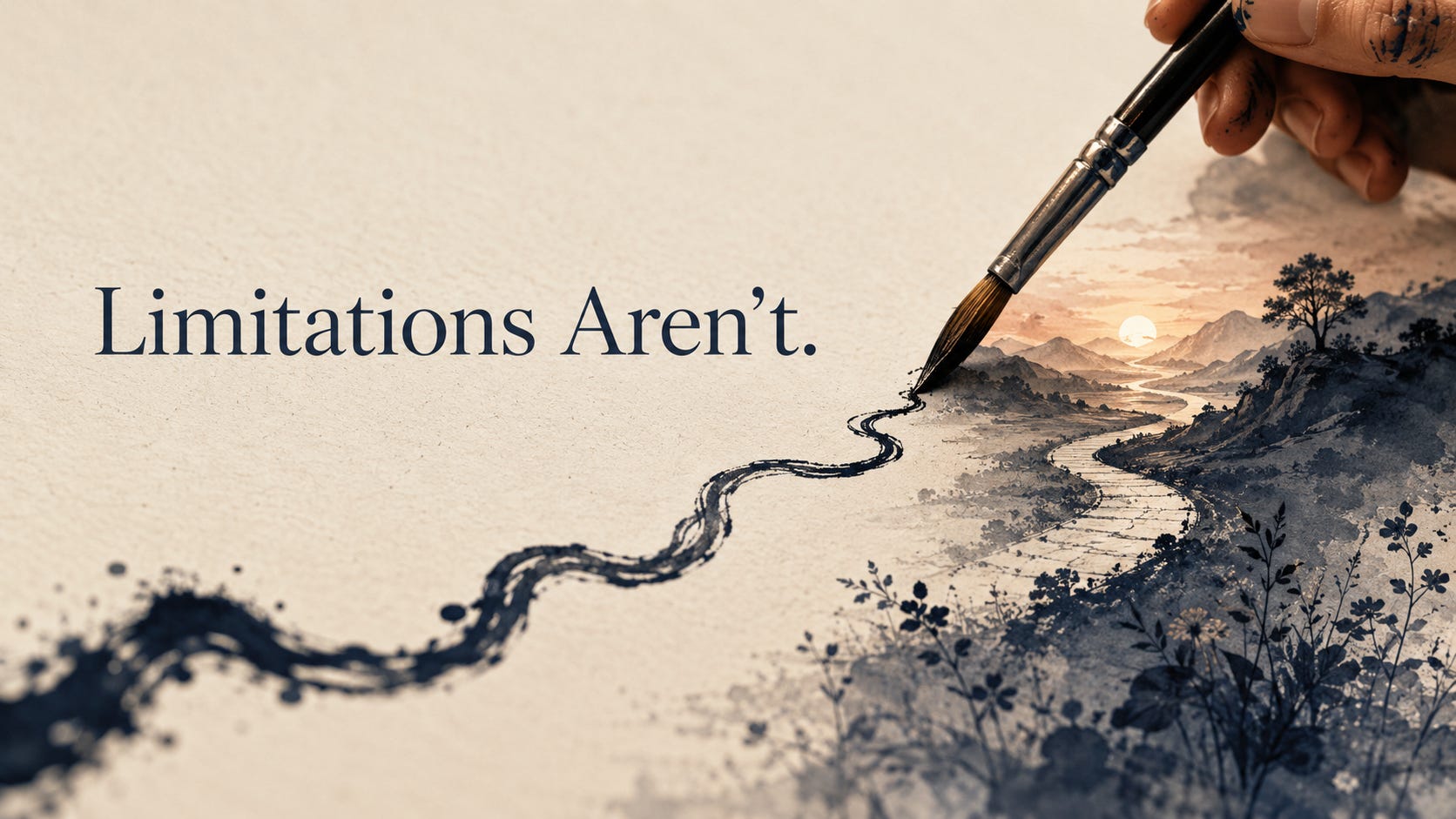
Limitations aren’t.
That’s the full sentence.
Not because limitations are imaginary. They are real. Cerebral Palsy is real. ADHD is real. Accessibility barriers are real. Time, budget, technology, bias, fatigue, and fear are real.
But limitations are not always the ending we think they are.
There’s a difference between a limitation and a self-limiting belief. A limitation is something that has been put in our way. A self-limiting belief is something we have put in our own way. The challenge is learning to tell the difference.
My Cerebral Palsy may shape how I move through the world. But the belief that it makes me less valuable? That is something else.
That is the part I have to challenge.
In design, we talk about constraints all the time. Business needs. Technical requirements. Accessibility standards. Timelines. User pain points. None of those things disappear just because we wish the work were easier.
But good design does not happen by pretending constraints are not there.
Good design happens when we understand the constraint deeply enough to create within it.
That is what Phil Hansen’s story reminded me of. After embracing his tremor, he began experimenting with new ways of creating art, including unconventional materials and methods that were not dependent on the precision he once thought he needed. His limitation did not erase his creativity. It redirected it.
That is the part I want to hold onto.
Maybe the goal is not always to overcome the limitation.
Maybe sometimes the goal is to seize it.
To ask: What is this teaching me? What does this force me to notice? What path does this open that I would not have taken otherwise?
For me, Cerebral Palsy has shaped the way I think about inclusion, patience, effort, communication, and design for real people. It has made me more aware of the gap between what looks easy and what actually is. It has made me sensitive to the ways people adapt quietly, often without recognition.
That does not make it easy.
But it does make it meaningful.
And maybe that is the superpower. Not in a polished, comic-book way. More like a lens. A way of seeing. A reminder that what makes us different may also be what makes us useful.
So when I think about “embrace the shake,” I don’t hear it as a motivational slogan.
I hear it as an invitation.
Stop waiting to become the version of yourself with no obstacles.
Stop assuming the thing that makes life harder disqualifies you from doing meaningful work.
Stop confusing the limitation with the belief that you are limited.
Because sometimes the thing we are trying to hide is the very thing teaching us how to create, lead, design, and live differently.
The shake is not the end of the story.
Sometimes, it is where the work begins.
Let’s prototype life, together.
Support The UX of Life
If this piece meant something to you, you can support The UX of Life by making a pledge.
Pledging does not mean the publication is going paid today. No one is charged today. It simply lets me know you’d be willing to support this work if I decide to launch paid subscriptions in the future.
To pledge, visit The UX of Life on Substack and click “Pledge your support.”